Noticing a little pink in the sink when you brush is easy to brush off, but it is one of the earliest signals your gums are asking for attention. For many people, that moment raises a genuine question: is this just a minor irritation, or is something more serious developing beneath the surface?
The core distinction between gingivitis and gum disease comes down to one word: reversibility. At Dentist of Torrance, the team sees patients at every stage of this spectrum, from people catching it early to those who have been managing symptoms for years without knowing exactly what stage they are in.
Keep reading to find out how these two conditions differ, what the warning signs look like in your own mouth, and which steps actually help at home versus when a professional cleaning or deeper treatment is the right call. Practical answers about your gum health are ahead, without the jargon or the pressure.
The Core Difference at a Glance
Gingivitis is inflammation limited to the gum tissue itself, while periodontitis means the infection has spread to the bone and the structures anchoring your teeth. That single distinction changes everything about how each condition is treated and whether the damage can be undone.
Why Mild Gum Inflammation Is Not the Same as Tissue Damage
Gum inflammation occurs when plaque builds up along the gumline and irritates the surrounding tissue. The gums turn red, swell slightly, and may bleed easily. But the periodontium, the network of bone, ligaments, and connective tissue supporting each tooth, remains intact. No bone loss has occurred yet, and the gum tissue can return to full health.
Periodontitis is a different situation entirely. Plaque and tartar have extended below the gumline, and the bacterial infection has triggered an immune response that is beginning to destroy bone. Once bone is lost, it does not grow back on its own. That is the line that separates a warning from structural damage.
When Gingivitis Becomes Periodontal Disease
The shift from gingivitis to periodontitis is not a single dramatic event. It happens gradually as plaque control breaks down and tartar accumulates in areas a toothbrush cannot reach. Bacteria colonize deeper under the gum, pockets form between the tooth and gum tissue, and the infection spreads to the bone below.
Not everyone with gingivitis progresses to periodontitis, but without consistent oral hygiene and professional cleanings, the risk is real. Certain factors, including smoking, diabetes, and genetics, can accelerate that transition significantly.
Why Reversibility Is the Big Divider
Condition | Tissue Affected | Bone Loss | Reversible? |
Gingivitis | Gum tissue only | No | Yes, with proper care |
Early Periodontitis | Gum and bone | Beginning | Managed, not fully reversed |
Moderate Periodontitis | Gum, bone, ligament | Moderate | Managed with treatment |
Advanced Periodontitis | Severe bone and tissue | Significant | Requires surgery or tooth loss risk |
Reversibility is not just a clinical term; it is a practical decision point. If your gums are inflamed but no bone loss has occurred, the right home routine and a professional cleaning can restore them to health. Once periodontitis sets in, the goal shifts from reversal to management and preventing further loss. Knowing which stage you are in changes what your next dental visit looks like.
Signs You May Notice in the Mirror or While Brushing
Most gum problems announce themselves in ways you can actually see and feel, even before you step into a dental chair. Knowing what to look for helps you respond at the right moment rather than waiting until symptoms become harder to treat.
Early Signs That Point to Gingivitis
The earliest signs of gingivitis are easy to spot if you know what healthy gums look like. Healthy gums are firm, pale pink, and do not bleed when you floss gently. Early gingivitis shows up as:
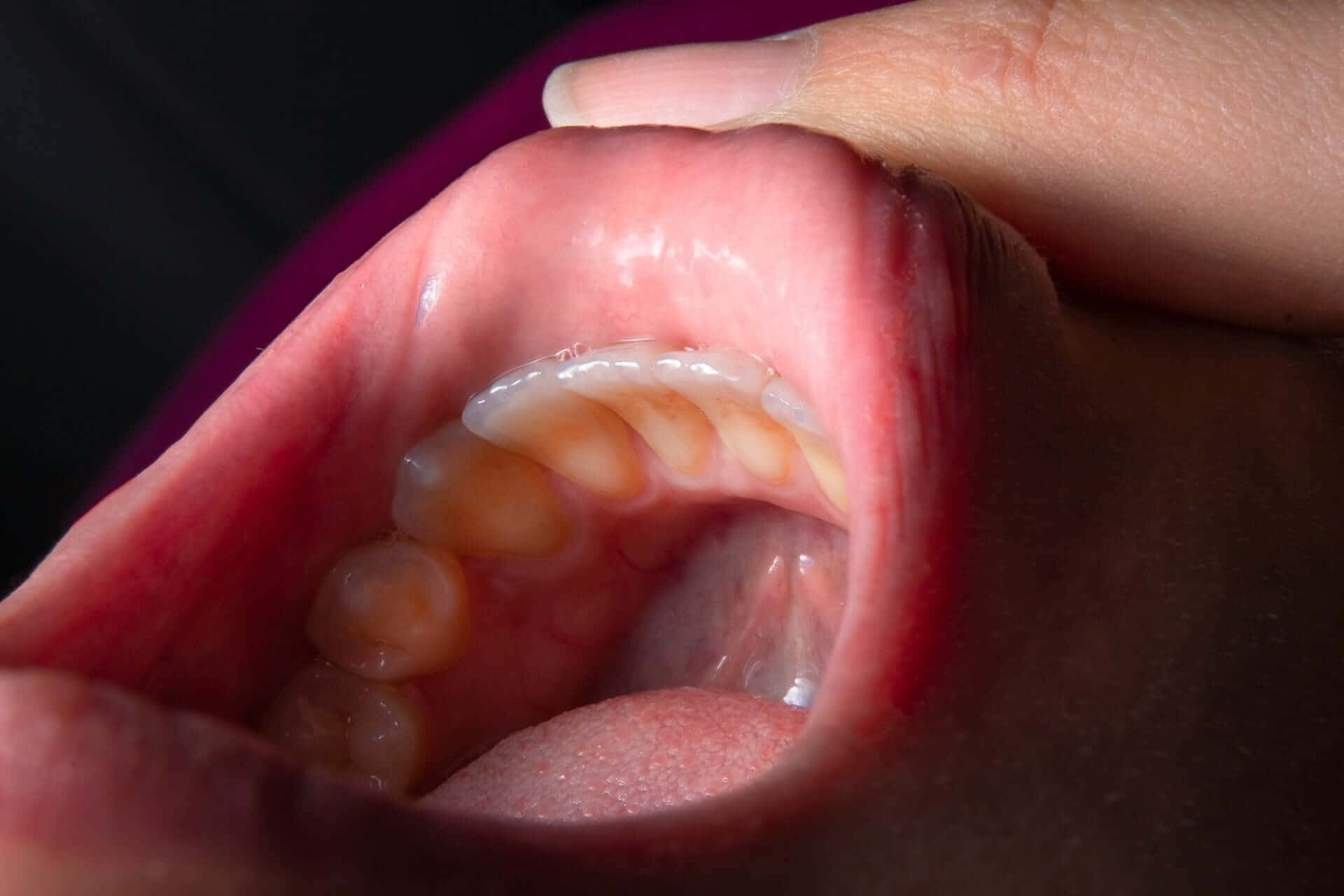
Gums that look redder or darker than usual, especially along the gumline
Slight puffiness or swelling at the base of the teeth
Bleeding when you brush or floss, even with light pressure
Gums that feel tender when touched or when eating firm foods
Mild bad breath that persists even after brushing
These symptoms typically appear gradually and may come and go. They do not cause sharp pain, which is part of why gingivitis gets overlooked for months.
Symptoms That Suggest a Deeper Problem
Symptoms of periodontitis go beyond surface-level redness. Receding gums are a common early signal; your teeth may look longer than they used to as the gum tissue pulls back from the crown. Gum pockets deepen, which you likely cannot see but your dentist measures during an exam with a small instrument called a periodontal probe.
As the disease progresses, you may notice loose teeth or teeth that feel slightly shifted. Exposed tooth roots can make your teeth sensitive to cold drinks or air. Pus along the gumline, though alarming, is a sign the infection is active. Shifting teeth and changes in how your bite fits together are later-stage indicators that bone loss is progressing.
Why Bad Breath, Sensitive Teeth, and Bleeding Matter
Bad breath that returns quickly after brushing is often caused by bacteria living in the deeper gum pockets, not just by surface debris. It is one of the signs people tend to dismiss as a hygiene issue when it is actually a sign of infection. Persistent bad breath combined with bleeding gums is worth taking seriously.
Sensitive teeth can have several causes, but when sensitivity appears alongside bleeding gums and visible gum recession, the likely source is exposed root surfaces from receding gums. That combination points toward periodontitis rather than a simple cavity.
Any single symptom can be easy to explain away; patterns of symptoms together are what tell the real story, and that story becomes much clearer once a professional takes measurements.
How Gum Problems Progress Over Time
Gum disease does not jump from healthy to severe overnight. It moves through identifiable stages, and recognizing where you are in that progression shapes every subsequent treatment decision.
From Plaque Control Problems to Gingivitis
Plaque is a soft, sticky film of bacteria that forms on teeth throughout the day. When plaque is not removed consistently through brushing and flossing, it mineralizes into tartar within about 24 to 72 hours.
Tartar cannot be removed at home; it bonds to the tooth surface and requires professional dental instruments. Once tartar accumulates along and below the gumline, the bacteria it harbors trigger inflammation, and gingivitis begins.
Poor oral hygiene does not have to be extreme to allow this cycle. Missing a few days of flossing, brushing only once a day, or failing to reach the back molars consistently is enough to let plaque build up in the spots that matter most.
Early, Moderate, and Advanced Periodontitis Explained
Once periodontitis develops, it progresses through stages defined largely by pocket depth and bone loss:
Early periodontitis: Pockets measure 4-5 mm. Some bone loss has begun. Home care alone cannot control the infection at this stage.
Moderate periodontitis: Pockets reach 5-6 mm. More bone tissue is destroyed, and the gums begin to recede visibly. Teeth may start to look longer.
Advanced periodontitis: Pockets exceed 6 mm. Bone loss is significant, teeth may be loose, and tooth loss becomes a real risk if treatment is delayed.
Each stage requires a different level of professional intervention, ranging from a standard cleaning at the early stage to surgical procedures at the advanced stage.
How Deep Pockets and Bone Loss Change Treatment
Pocket depth is the number that drives the treatment plan. At 3 mm or less with no bleeding, gums are considered healthy. At 4 to 5 mm with bleeding, a deep cleaning called scaling and root planing is typically the first professional response. Beyond 6 mm, more involved procedures become necessary.
Bone loss adds another layer of complexity because lost bone changes how a tooth is supported. A tooth with significant bone loss around it is structurally vulnerable even if the crown looks fine.
The treatment goal shifts from just reducing infection to stabilizing what remains. What the dentist finds during your periodontal exam (pocket depths, bone levels on X-rays, and gum tissue condition) determines how far beyond home care your treatment needs to go.
What You Can Do at Home for Mild Cases
If your symptoms are consistent with early gingivitis, meaning your gums are inflamed, but no bone loss has been confirmed, consistent home care can genuinely reverse the condition. The key word is consistent, not perfect.
How to Brush and Floss More Effectively
Brushing twice a day with a soft-bristled brush at a 45-degree angle toward the gumline removes plaque from the area where it causes the most damage. An electric toothbrush is worth considering here; research consistently shows they remove more plaque than manual brushing, particularly along the gumline where gingivitis begins.
Flossing once a day is the other half of the equation. If flossing causes significant bleeding every single time for more than two weeks of consistent effort, that is a signal to call your dentist rather than push through it alone. The goal is to clean below the contact point between teeth, where a brush cannot reach.
Mouthwash, Daily Habits, and Tobacco Risks
An antibacterial or antiseptic mouthwash, particularly one containing chlorhexidine or cetylpyridinium chloride, can reduce bacterial load in the mouth and support gum healing when used alongside brushing and flossing. It is not a substitute for mechanical cleaning; it complements it.
Chewing tobacco and smoking significantly increase the risk of gum disease and slow healing. Tobacco reduces blood flow to the gum tissue, which can mask bleeding and interfere with the body's ability to fight infection. Someone who smokes may not notice early bleeding gums even as the disease progresses, making regular exams especially important.
How to Help Prevent Future Flare-Ups
Maintaining healthy gums long-term comes down to removing plaque consistently and seeing a dental hygienist regularly to remove tartar before it leads to inflammation. Staying hydrated, managing stress, and controlling conditions like diabetes also matter because systemic health directly influences gum health.
If your gingivitis has cleared with better home care, do not let the improved appearance convince you the routine can slip again. Gingivitis tends to return when oral hygiene lapses, and each cycle of inflammation makes it slightly easier for the condition to progress further. Good habits prevent the cycle from repeating.
When Home Care Is No Longer Enough
There is a clear point at which brushing and flossing, no matter how thorough, cannot reach what needs treatment. That is when professional care steps in, and the type of care depends on how far the disease has progressed.
What a Dentist or Dental Hygienist Checks
At a dental visit for suspected gum disease, your dental hygienist or dentist will measure the depth of each gum pocket using a periodontal probe. They will also look for bleeding on probing, gum recession, tooth mobility, and take X-rays to assess bone levels. These measurements provide a precise picture that no mirror at home can provide.
A professional dental cleaning at this stage is not the same as a routine polish. If pockets are within a healthy range and no bone loss is present, a standard cleaning with tartar removal is appropriate. If measurements indicate early-to-moderate periodontitis, scaling and root planing is the recommended starting point.
Professional Treatments for Deeper Infection
Scaling and root planing, sometimes called a deep cleaning, involves carefully removing plaque and tartar from below the gumline and smoothing the root surfaces so bacteria have a harder time reattaching.
It is typically done in quadrants with a local anesthetic so you stay comfortable throughout. After the procedure, gums are given time to reattach to the cleaned root surfaces, and a follow-up appointment confirms whether the tissue has responded.
For many patients with early to moderate periodontitis, scaling and root planing combined with improved home care is enough to bring the disease under control. Antibiotic therapy, either local (placed directly into a pocket) or systemic, may be added when infection is more persistent.
When Surgery May Be Part of the Plan
Advanced periodontitis with deep pockets and significant bone loss may require surgical intervention. Options include:
Flap surgery (osseous surgery): The gum is lifted back so the dentist can access and clean deep root surfaces and reshape the underlying bone.
Soft tissue grafts: Donor tissue is used to cover exposed roots and address significant gum recession.
Bone grafting and guided tissue regeneration (GTR): These procedures aim to regenerate lost bone and supporting tissue around teeth affected by advanced disease.
Surgery is not a first resort; it is the appropriate response when non-surgical treatment has not controlled the infection or when bone loss is severe enough to threaten teeth. The goal is always to preserve as much natural tooth structure as possible.
Frequently Asked Questions
What's the Difference Between Mild Gum Inflammation and Early Periodontitis, and How Can You Tell at Home?
Mild gum inflammation (gingivitis) is limited to the gum tissue, whereas early periodontitis indicates that bone loss has begun. At home, you cannot confirm bone loss; only a dentist, using a probe and X-rays, can accurately measure pocket depth and assess bone levels. Bleeding and redness alone do not tell you which stage you are in.
Why Do My Gums Bleed When I Brush or Floss, and When Should I Call My Dentist?
Bleeding gums are the most common early sign of gingivitis, caused by inflammation that weakens the gum tissue. If bleeding persists consistently for two weeks or more despite improved brushing and daily flossing, it is worth scheduling a dental visit to rule out deeper infection.
Can Gum Inflammation Cause Gum Recession, and Can That Recession Be Reversed?
Prolonged gum inflammation does contribute to gum recession, especially when it progresses to periodontitis. Once gum tissue has receded significantly, it does not grow back on its own; soft tissue grafts are the clinical option for restoring coverage over exposed roots.
What Are the Most Common Signs Your Gums Are Healthy Versus Needing Treatment?
Healthy gums are firm, pale pink, and do not bleed with gentle flossing. Gums that are red, swollen, tender, or bleed regularly are signaling that something needs to change, whether that means better home care or a professional cleaning.
Is Gum Disease Actually Curable, or Is It Something You Manage Long-Term With Cleanings and Home Care?
Gingivitis is fully reversible with proper care. Periodontitis, once it has caused bone loss, is managed rather than cured; treatment controls the infection and slows progression, but lost bone does not fully regenerate without surgical intervention. Long-term maintenance cleanings every three to four months are typically part of the plan for anyone with a history of periodontitis.
What Treatment Options Work Best for Early Gum Problems, and What Happens If You Wait Too Long?
Early gingivitis responds well to a professional cleaning combined with consistent brushing and flossing at home. Waiting allows plaque to become tartar, pockets to deepen, and bone loss to begin, all of which require more involved treatment and produce less complete outcomes than catching the problem early.
Your Gums Are Worth Taking Seriously Before It Gets Complicated
The gap between gingivitis and periodontitis is not measured in years; it is measured in how consistently plaque is managed and whether professional care happens before bone loss begins. Catching inflammation early gives you the simplest, most affordable path to healthy gums right now.
If your gums have been bleeding, or you have noticed sensitivity, recession, or persistent bad breath, those are not symptoms to wait out. A periodontal exam gives you a clear answer about where you stand and what your options look like.
Your family's dental health does not have to feel complicated or expensive. Reach out to Dentist of Torrance and find out how affordable, comfortable care fits into your schedule. Call us at 213-929-8633 or book your appointment online today.